
Domestic Violence Resources

Breaking the Cycle of Domestic Violence: We Can Help You Stay Safe
Domestic violence is a pervasive issue that affects millions of people worldwide. In the US alone, on average, nearly 20 people per minute are physically abused by an intimate partner. In California, Domestic violence makes up 20% of violent crimes. It can be difficult to know what to do if you, or someone you love is experiencing abuse at the hands of a partner. Breaking the cycle of domestic violence is a complex process that requires sensitivity, patience, support, and resources.
YWCA Monterey County provides assistance to those in our community who are being abused, and we provide practical steps to escape domestic violence and rebuild your life on solid ground. From recognizing the signs of abuse to accessing resources and creating a safety plan, we provide support and guidance to help you.
Recognizing the Signs of Domestic Violence
Recognizing the signs of domestic violence can be challenging, as many victims are afraid to speak up or may not realize they are being abused. However, there are some common warning signs:
Frequent injuries, such as bruises, cuts, or broken bones
Changes in behavior, such as becoming withdrawn, anxious, or depressed
Isolation from friends and family
Controlling behavior, such as monitoring phone calls or social media accounts
Verbal abuse, such as name-calling or put-downs
Sexual coercion or assault
Financial abuse, such as controlling access to money, recklessly spending money to incur debt, and refusing to let them work.
We understand that those experiencing domestic violence must be approached with sensitivity and care. We avoid blaming or shaming, as this may make you feel more isolated and vulnerable. Our approach is trauma-informed care.
Red Flags to watch for!
We put together this informative video to share a common control tactic teens will sometimes face, although these red flags apply to every relationship. With technology being the new face of abuse, we wanted to make a video of a common situation, but it is, in fact, a warning sign. As we learn the signs of abuse, we can create our own boundaries in relationships and take action when those boundaries are crossed.
-

Domestic Violence Housing
As a domestic violence (DV) services provider our clients are fleeing an abusive relationship and are classified homeless or unsheltered when they present to our agency. We fully understand that these victims of DV present with diverse needs and face barriers and challenges in obtaining suitable housing and our goal is to provide comprehensive and holistic services to them as they process their reality of dealing with the challenges they face as victims and survivors. Our housing program offers options to begin to address their housing situation: a confidential emergency shelter; a confidential transitional housing option that then can lead to more permanent housing opportunities as they work with our DV Housing Counselor.
-
Mental Health Services
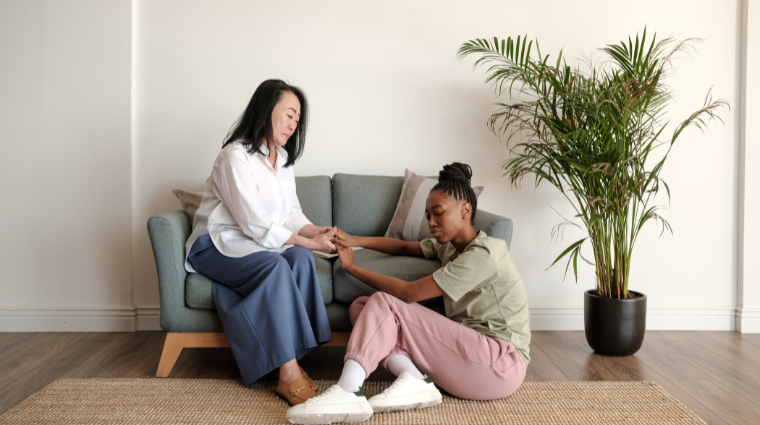
YWCA MC offers specialized therapy for those exposed to domestic violence. Our clinicians use age-appropriate techniques with evidence-based methods like Trauma-Focused Cognitive Behavioral Therapy. Our focus is on boosting self-esteem, reducing anxiety, and teaching healthy coping skills. We provide individual, and family therapy in both English and Spanish. Sessions can be in-person at our offices in Salinas and King City, or via Telehealth. Services are often free or on a sliding scale based on income. We also offer therapy for crime victims eligible for CalVCB benefits. We offer psychoeducational groups for domestic violence victims, covering topics such as power dynamics and safety planning.
Understanding Domestic Violence and the Cycle of Abuse
Domestic violence is a pattern of behavior used by one person to control and dominate another person in a relationship. It can take many forms, including physical, sexual, emotional, digital, spiritual, psychological, and financial abuse. It is not gender specific; it can happen to anyone. Domestic violence is not a one-time violent event but a pattern of behavior that escalates over time. It can start with small acts of control, such as monitoring phone calls or isolating from friends and family. Over time, it can escalate to physical violence, sexual assault, and even homicide. Domestic violence is a crime, and perpetrators can face legal consequences.
The cycle of domestic violence is a repetitive pattern of behavior that often occurs in abusive relationships. It consists of three phases: the tension-building phase, the acute violent phase, and the honeymoon phase.
Tension Building Phase
In the tension-building phase, the abuser becomes increasingly irritable and critical, and the victim may feel like they are walking on eggshells.
Acute Violent Phase
In the acute violent phase, the abuser becomes physically or verbally violent, and the victim may fear for their safety.
Honeymoon Phase or Period of Calm
In the honeymoon phase, the abuser may apologize and promise to change, and the victim may feel hopeful that things will improve and, in some cases, seem better than ever. However, the honeymoon phase is usually short-lived, and the cycle of violence often repeats itself. It is essential to recognize this cycle and understand that the victim may feel trapped and unable to leave the relationship.

Why Victims Stay in Abusive Relationships
Many people wonder why victims of domestic violence stay in abusive relationships. There are many reasons, and it is essential to understand that leaving an abusive relationship is not as easy as just walking away. Some common reasons why victims stay include:
Fear for their safety or the safety of their children
Fear of becoming homeless
Financial dependence on the abuser
Believing that the abuse is their fault or that they deserve it
A victim of coercive control
Lack of social support or access to resources
Hope that the abuser will change
Fear of being alone or not being able to find another partner

We offer support and understanding, help you access resources, and create a safety plan. Leaving an abusive relationship is a difficult and often dangerous process. It is up to you to decide when and how to leave, and we can help you through the process.
Developing a Plan for Safety
Creating a safety plan is an essential step to escape domestic violence. Reaching out is the first step, and YWCA-Monterey County will help tailor a personalized plan that outlines steps you can take to stay safe and protect yourself and your children from harm.
Here is an example:
Identify safe places to go in an emergency, such as a friend’s house, and reach out to us at our 24/7 crisis line to access our confidentially located shelter.
Keep important documents, such as identification and legal papers, in a safe place—a place your abuser cannot find.
Start the process by saving cash in a secret place. One way many have started this process is by using cash for household purposes and keeping the change in a stash spot.
Develop a code word or signal to communicate to a friend when you need help.
Be aware of your surroundings by taking note of the fastest way to escape with your keys.
Create a go-bag with essential items, such as keys, clothes, cash, documents, and medication, in case you need to leave quickly and keep that bag hidden.
It is in your best interest to obtain an order of protection from law enforcement. Having the courts on your side will help you get emergency custody of your children or even your pets in some cases. Visit our Legal Resource page for information outlining where to go to obtain a restraining order.
Monterey County Police Departments are available and ready to help. If it is an emergency, please call 911 to get immediate help. To reach our crisis line call: +1-831-757-1001
Non-Emergency Lines:

Supporting You Through the Healing Process
Recovering from domestic violence is a long and difficult process that requires support and compassion. Here are some ways we support you through the healing process:
We listen without judgment and believe every aspect of your situation.
We provide safe shelter located in a confidential location. We understand that there are preconceived notions of what a shelter may look like, but you may be surprised to find many wonderful people who are kind and helpful, people who will help you and your family heal through a shared understanding of your family’s situation. A place where you feel safe, you have plenty of food and hygiene items, and where your children are safe, have toys, and are well-fed. A place where you can think, breathe, recover, and regroup. Where you can talk to those trained to help you access resources to put yourself and your family on a path to stability.
We offer emotional support through our mental health services, utilizing a trauma-informed approach. Our therapists are licensed to provide therapy sessions.
We help you access resources, such as housing service programs, financial classes, and many more resources that apply to your unique situation.
We encourage self-care and will help you find ways to make self-care a reality.
It is essential to remember that healing takes time and that every survivor’s journey is unique. Reaching out is the first step, and we are here to help. Our crisis line is 24/7 every day of the year. Even if you just need someone to listen to your unique situation, you will reach a trained Domestic Violence Advocate.
24/7 Local Crisis Line: +1-831-757-1001
